
New Open Data Portal Fuels AI, Apps with 500+ Datasets

Alexander Bazilevich is a CRM expert and Top Salesforce Partner with over 17 years of sales experience in the IT industry. He specializes in transforming corporate goals into profits through cross-functional collaboration and innovative business solutions, with deep expertise in business systems and IT products.
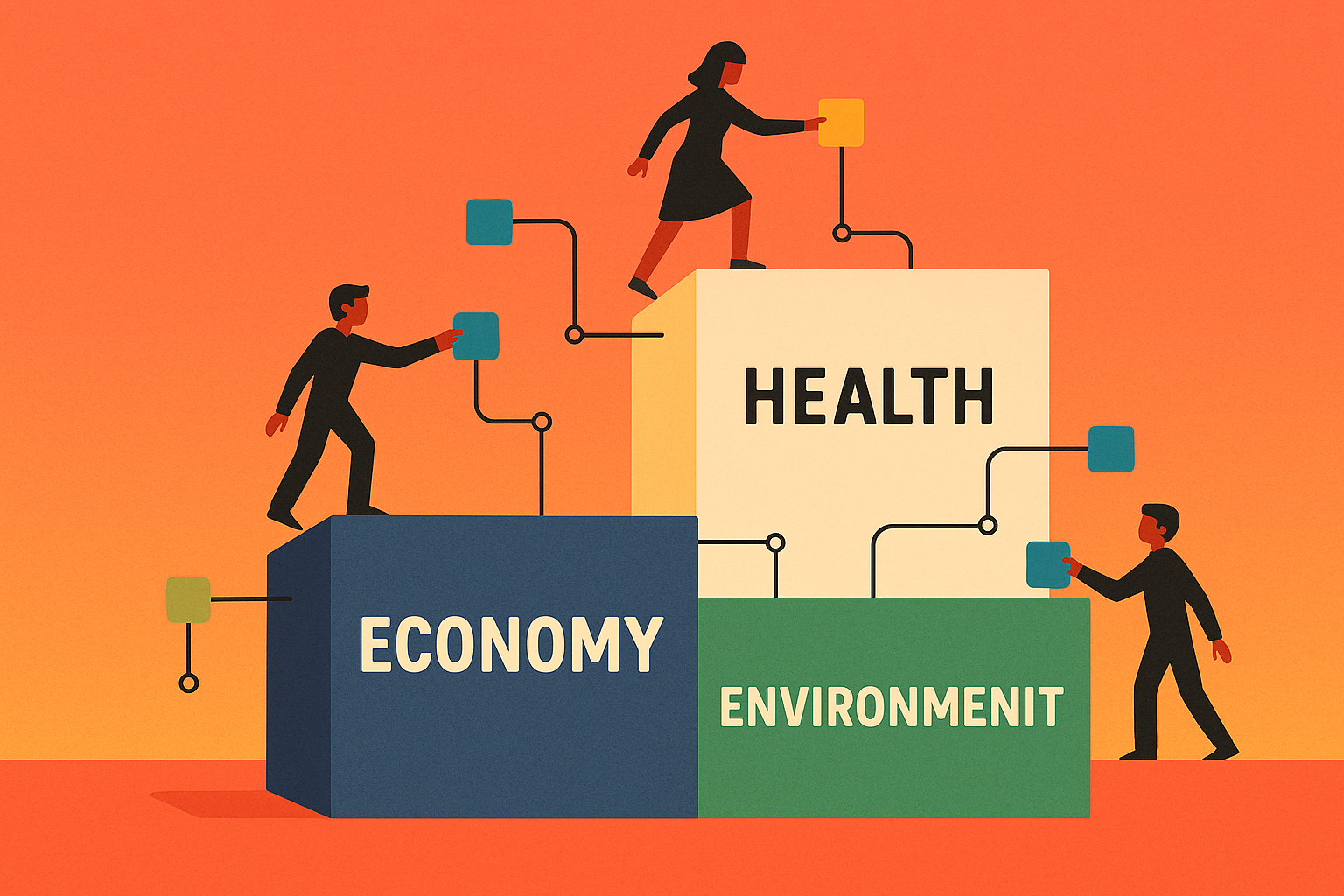
New national open data portal launches with 500+ datasets (economy, health, environment) to fuel AI, apps, and analytics.
New Open Data Portal Fuels AI, Apps with 500+ Datasets
A new open data portal is now live, offering free access to over 500 government datasets to fuel AI models, apps, and analytics. This national repository provides machine-readable files on the economy, health, and environment, fostering innovation and economic growth by making high-quality data universally accessible for developers, researchers, and businesses.
What is the new national open data portal and why is it important?
This national open data portal provides over 500 regularly updated, machine-readable government datasets across the economy, health, and environment. Its importance lies in fueling innovation for AI, mobile apps, and analytics dashboards, driving economic growth and transparency in a global digital economy projected to hit USD 28 trillion by 2026. Open data initiatives are credited with unlocking a potential USD 3 trillion uplift in economic value.
What is inside the portal?
The portal contains regularly updated datasets covering the economy, health, and environment. Data is available in standard machine-readable formats like CSV, JSON, and GeoJSON. Examples include provincial GDP, hospital vaccination rates, and real-time air quality sensor readings, all published under a permissive license.
| Dataset family | Examples | Format | Update cadence |
|---|---|---|---|
| Economy | GDP by province, tax revenue, SME loan volumes | CSV, JSON | Monthly |
| Health | Hospital bed occupancy, vaccination rates, disease registries | CSV, API | Weekly |
| Environment | Air-quality sensors, river levels, forest-cover rasters | GeoJSON, HDF | Daily |
All datasets are published under a permissive CC-BY license and adhere to FAIR principles - findable, accessible, interoperable, and reusable. A SPARQL endpoint enables cross-silo queries, allowing users to link environmental data like factory locations with health metrics such as asthma admissions and economic figures like export volumes.
Why these three sectors first?
The government prioritized these sectors based on over 40 citizen petitions and 20 private-sector white papers highlighting their proven return on investment when data is open. For example, one company improved demand forecasting by 18% by mixing sales data with open weather data, while a pharma distributor used aggregated health data to expedite critical medicine deliveries.
"The biggest risk is not commercial reuse; it's that nobody shows up. We would rather see 100 apps we never imagined than five we prescribed." - senior policy officer involved in the portal architecture
Developer uptake in 2025-2026
Early traffic shows strong interest, with a 60/40 split between domestic and international developers. The most downloaded dataset - a time series of urban air-quality data - was forked 140 times on a data-science platform within 48 hours. This aligns with the goals of initiatives like the 2026 Spatial Data Infrastructure Modernization Project, which seeks fresh, validated data feeds. Hackathons are also driving adoption; upcoming events in Astana and Almaty will build on the success of similar gatherings that produced dozens of prototypes in hours.
Challenges that still linger
Despite early enthusiasm, challenges remain. The OECD's 2025 Government at a Glance report highlights a gap between data availability (0.48/1.0) and government support for its reuse (0.37/1.0), indicating a need for more mentorship and co-funding. Cybersecurity is a major concern, as analysts warn that USD 3.13 trillion in economic value is at risk without robust data protection. The portal already addresses this by isolating personal identifiers in a separate, encrypted enclave.
What happens next?
The future roadmap includes adding datasets for agriculture, transport, and education, which intersect with the initial sectors. The portal's CKAN engine is also testing an AI chatbot to translate plain-language queries into SQL, making data accessible to non-programmers. While the API is currently rate-limited, a higher-tier plan is expected. The portal is already generating savings, allowing ministries to source intelligence for free and saving an estimated USD 2 million annually.
The portal's ultimate success will depend on a culture of sustained data publishing and entrepreneurial innovation. The potential economic uplift, estimated globally at USD 3 trillion, hinges on whether developers can transform these 500+ datasets into valuable, defensible new products and services. With early developer engagement high, the initiative is off to a promising start.